Welcome back to the club. Today’s edition explores:
Deep Dive: What one cup of blueberries did to memory, focus and blood sugar over a full day
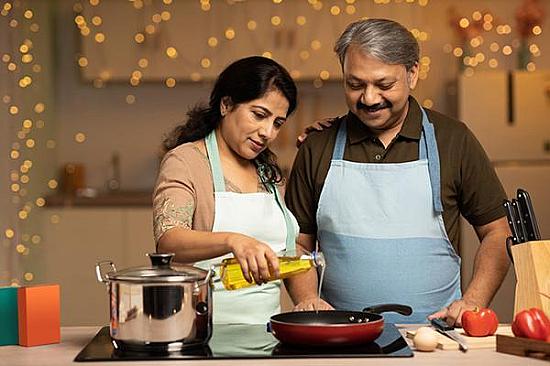
Myth Buster: Are seed oils poisoning you and is beef tallow the healthy alternative?
Pillar Spotlight: The ten-minute walk that flattens your blood sugar spike
DEEP DIVE
One Cup of Blueberries, Eight Hours of Sharper Thinking
We tend to think of healthy eating as a long game. You eat well for years and hope it pays off decades later. But a study from the University of Reading and the Illinois Institute of Technology, published in the European Journal of Nutrition, asked a much shorter question. What happens in the hours after a single serving of blueberries?
Blueberries are rich in polyphenols (natural plant compounds that give fruit its deep colour), and these peak in the blood one to three hours after you eat them. That raised a possibility most research had skipped past. If they do anything for the brain, they should do it that same day. Earlier work had found exactly that in children and older adults. Middle age was the gap, which matters, because midlife is when memory and focus quietly begin to slip.
Thirty-five healthy adults aged forty to sixty-five came in twice, at least a week apart. Each time they ate the same large breakfast, roughly 690 calories and heavy on carbohydrates. Alongside it they drank either 25 grams of freeze-dried wild blueberry powder, about a cup of fresh berries, or a placebo matched almost exactly for calories and sugar. Nobody, participant or researcher, knew which was which on the day. Blood was drawn nine times over the next eight hours, and cognitive tests were repeated at two, four, six and eight hours: a word list task requiring people to recognise words they had seen and reject ones they had not, and a Go/No-Go task requiring them either to respond fast or hold back, depending on the cue.
The first finding was metabolic. Over the first two hours, glucose and insulin both ran significantly lower after the blueberry drink. Same calories, same sugar, smaller spike. Insulin peaked around 80 after blueberry against roughly 99 after placebo. After two hours the curves converged, so this was an effect on the early surge rather than the whole day.
The cognitive half is the more surprising one. What the blueberries mostly did was stop people getting worse. On word recognition, accuracy after the placebo dropped significantly by two hours and stayed down all day. After blueberry it did not fall at any point. On the harder rejection measure, blueberry participants caught more of the false words, and the gap was widest at four hours.
The same pattern held on the response control task. On the most demanding trials, the ones where the cue misleads you and you have to override an instinct, errors after the placebo roughly doubled by the eight-hour session. After blueberry they stayed flat, and reaction times were faster at four and eight hours. Notice what that means. The benefit was not a burst of brilliance in the first hour. It was a refusal to fade.
The obvious explanation would be that blueberries helped thinking by steadying blood sugar. The researchers tested that, and the answer was no. Adding glucose and insulin into the models did not explain the cognitive gains. Two real benefits, running in parallel, not obviously connected. The authors are honest that the mechanism stays open, and point to other work suggesting blueberries increase blood flow to the front of the brain, the region handling focus and self-control.
The limitations are worth stating plainly. Thirty-five people is small, the study ran for a single day, and the statistical power was about seventy percent, which the authors flag themselves. The funding came from the Wild Blueberry Association of North America, though the funder had no part in the design or analysis.
Still, the shape of the result is worth sitting with. One cup of ordinary fruit, eaten with a fairly indulgent breakfast, blunted the blood sugar spike from that meal and kept the mind from tiring across a full working day.
The Protocol
Eat them with the meal: The berries went alongside a heavy, carbohydrate-rich breakfast, and that is where the glucose benefit showed up.
Aim for about a cup: The dose was 25 g of freeze-dried powder, roughly one cup of fresh berries. Frozen work just as well and cost less.
Expect stamina, not a spike: The gains appeared late, at four and eight hours, on the hardest tasks. This is a hedge against afternoon fade rather than a morning jolt.

MYTH BUSTER
"Seed oils are poisoning you, cook with beef tallow instead"
PILLAR SPOTLIGHT · MOVEMENT & METABOLISM
Walk Ten Minutes, Straight Away
When you walk matters more than how long you walk.
Researchers at Ritsumeikan University, publishing in Scientific Reports, had twelve healthy adults take a sugary drink and then either sit still, walk for ten minutes immediately, or wait half an hour and walk for thirty. Both walks lowered average blood sugar. But only the short, immediate walk significantly reduced the peak, bringing it down from about 182 to 164 mg/dL. The longer walk, started thirty minutes later, missed it entirely.
The reason is timing. Blood sugar peaks roughly thirty to sixty minutes after you eat, so a walk beginning after that window arrives too late to catch the surge.
So the goal is not a longer walk. It is an earlier one. Finish your meal, then move for ten minutes at a comfortable pace. This was a small study in young, healthy people, so treat the numbers with care, but the principle is free to test tonight.

That's it for this week.
A cup of berries with breakfast, an oil you were already using, ten minutes on your feet after dinner. None of it is dramatic, and that is rather the point. Thanks for spending part of your week with us.
Take care of yourself,
The Vitality Club
THE SUMMARY
Key takeaways
In a randomised, double-blind crossover trial, 35 healthy adults aged 40 to 65 had 25 g of freeze-dried wild blueberry powder, about a cup of fresh berries, or a matched placebo with breakfast.
Glucose and insulin were significantly lower over the first two hours after the blueberry drink.
Word recognition accuracy dropped after the placebo but did not fall at any point after blueberry.
Adding glucose and insulin to the models did not explain the cognitive gains.
In a small Scientific Reports study, a 10-minute walk straight after a sugary drink cut the blood sugar peak from about 182 to 164 mg/dL.
Sources
Whyte AR, et al. (2020). Improved metabolic function and cognitive performance in middle-aged adults following a single dose of wild blueberry. European Journal of Nutrition.
Hashimoto, et al. (2025). Positive impact of a 10-min walk immediately after glucose intake on postprandial glucose levels. Scientific Reports.
Harvard Health Publishing. Beef tallow, seed oils, and full-fat dairy: Are any of them heart-healthy?. Harvard Health.
About the authors
The Vitality Club is written by PhD researchers at Durham University, Marcus W, Camila G and Todd B, who turn new peer-reviewed health and longevity research into practical takeaways. This article is for education only and is not medical advice; talk to a qualified healthcare professional before changing your diet, exercise, supplements or medication.