
Welcome back to the club. Today's edition explores:
Deep Dive: Your brain does more when you write by hand
The Dosage: 25–29 grams of fibre a day
Quick Hits: 3 interesting reads from the health world this week
DEEP DIVE
Your Brain Does More When You Write By Hand

Most of us type nearly everything now. Notes, emails, to-do lists, study material, even the odd birthday card. It is faster and easier. But when the goal is to learn something and memorise it, your keyboard may be working against you.
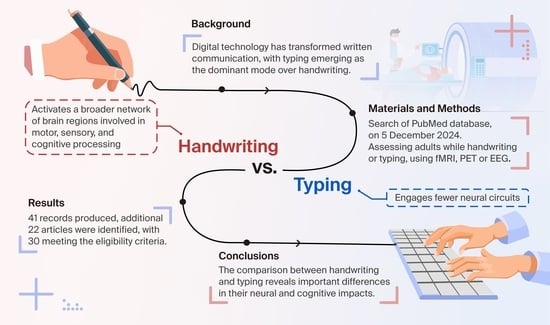
A recent review in the journal Life pulled together around 30 adult brain-imaging studies comparing handwriting with typing. The researchers looked at evidence from EEG, fMRI and PET scans to see what the brain actually does during each one.
One of the strongest findings came from a 2024 EEG study of 36 young adults. When people wrote by hand, activity connected across much more of the brain. Typing lit up far smaller areas. Handwriting also produced stronger alpha and theta rhythms, the brain patterns tied to learning and memory.
Put simply, handwriting makes the brain do more at once. You are planning the shape of each letter, controlling small precise movements, reading the visual feedback, and tying all of it to the thing you are trying to remember.
Typing asks less. Once you know where the keys are, your fingers follow a fixed map and the screen does the rest. The movements become predictable, so the brain can coast.
A well-known 2014 study by Mueller and Oppenheimer found that students who took notes by hand did better on questions about concepts than students on laptops. The odd part is that the laptop users captured more. They typed more words and were more likely to take down lectures almost verbatim.
That sounds like an advantage, but it was not. Writing everything down can mean processing less of it. Handwriting is slower, so it forces you to choose what matters, cut the rest, and put it in your own words. That extra work seems to be part of why it sticks.
The review points to older work too. In a 2008 study, Longcamp and colleagues found that letters learned by hand were recognised better than letters learned by typing, with more activity in brain regions linked to reading and movement.
The Protocol
When you are studying or planning something that matters, spend part of the session on paper instead of typing all of it.
After you read or hear something important, write the key ideas from memory. Pulling them out of your head is the point.
You do not have to ditch your devices. A focused 10 to 20 minute handwriting block is enough to make it a habit.
THE DOSAGE
Daily Fibre
A 2019 Lancet series of meta-analyses looked at 185 observational studies and 58 trials.
The sweet spot for the biggest health gains sat around 25 to 29 grams of dietary fibre a day. People in the highest fibre groups had roughly 15 to 30 percent lower all-cause and cardiovascular mortality than the lowest groups, plus lower rates of type 2 diabetes and colorectal cancer.
Beans, oats, fruit, vegetables and whole grains are great sources.

QUICK HITS
3 interesting reads from the health world this week



That's it for this week.
Pen and paper for the ideas that need to stick. Beans, oats and veg for the fibre target. Two small habits, both useful.
Take care of yourself,
The Vitality Club
THE SUMMARY
Key takeaways
A recent review in the journal Life pulled together around 30 adult brain-imaging studies comparing handwriting with typing.
In a 2024 EEG study of 36 young adults, handwriting produced connected activity across much more of the brain than typing, along with stronger alpha and theta rhythms tied to learning and memory.
In a 2014 study by Mueller and Oppenheimer, students who took notes by hand did better on conceptual questions than laptop users, even though laptop users typed more words.
A 2019 Lancet series of meta-analyses found the biggest health gains at around 25 to 29 grams of dietary fibre a day.
Sources
Marano, et al. (2025). The Neuroscience Behind Writing: Handwriting vs. Typing, Who Wins the Battle?. Life.
Van der Weel FR, Van der Meer ALH (2024). Handwriting but not typewriting leads to widespread brain connectivity: a high-density EEG study with implications for the classroom. Frontiers in Psychology.
Mueller PA, Oppenheimer DM (2014). The Pen Is Mightier Than the Keyboard: Advantages of Longhand Over Laptop Note Taking. Psychological Science.
Longcamp M, et al. (2008). Learning through Hand- or Typewriting Influences Visual Recognition of New Graphic Shapes: Behavioral and Functional Imaging Evidence. Journal of Cognitive Neuroscience.
Reynolds A, et al. (2019). Carbohydrate quality and human health: a series of systematic reviews and meta-analyses. The Lancet.
About the authors
The Vitality Club is written by PhD researchers at Durham University, Marcus W, Camila G and Todd B, who turn new peer-reviewed health and longevity research into practical takeaways. This article is for education only and is not medical advice; talk to a qualified healthcare professional before changing your diet, exercise, supplements or medication.