
Welcome back to the club. Today’s edition explores:
Deep Dive: Why believing stress is harming you may be the real risk
Video of the Week: What living online is doing to your body
Quick Hits: 3 interesting reads worth a few minutes of your time
DEEP DIVE
The Belief That Turns Stress Into A Risk Factor
Everyone knows stress is bad for you, and that may be part of the problem.
Researchers tracked nearly 29,000 American adults for nine years and found something odd. Stress levels alone didn’t predict who died early. Neither did believing stress was damaging your health. It was the combination of the two that showed up in the data.
We tend to treat stress as a single number. How much pressure are you under? High, medium, low. Track it, reduce it, move on.
A team at the University of Wisconsin–Madison thought that was missing something. They pulled data from the 1998 National Health Interview Survey, a nationally representative sample of 28,753 adults, and asked two separate questions.
The first was familiar: how much stress did you experience over the past year? The second was the interesting one: how much effect has that stress had on your health?
Those two answers diverge more often than you would expect. You can be under enormous pressure and feel like you are handling it. You can be under very little and still believe it is quietly wearing you down. Around a third of adults said stress had affected their health at least somewhat.
The researchers then linked every respondent to the National Death Index and followed them for nine years. By the end of the period, 2,960 people had died.
Neither answer predicted early death on its own. Not the amount of stress, nor the belief that it was causing harm. Only the overlap mattered. People who reported both a lot of stress and the belief that it was seriously affecting their health had a 43% higher risk of dying during the follow-up period.
The pattern held for how people felt day to day, too. Those who said stress affected them “a lot” were over four times more likely to report being in poor health and five times more likely to be in psychological distress, even after accounting for income, education, smoking, exercise, existing conditions and access to healthcare.
Why would a belief carry that kind of weight? The researchers offer a few possibilities. It may stand in for pessimism, and negative expectations reliably predict worse outcomes. It may reflect an external locus of control, the sense that your health is happening to you rather than something you steer. Or it may simply mark out the people whose stress response has been running hot the longest, with the accumulated wear that brings.
Two caveats. When the researchers accounted for how healthy people already felt, the mortality effect shrank considerably and became borderline. People who were already unwell may have been more likely to blame stress for it. And apart from the death records, everything here was measured at a single point in time, back in 1998.
So this is not evidence that your thoughts about stress are killing you. But it does suggest that how you read your stress tells you something your stress levels alone don’t.
The Protocol
Separate The Load From The Story: Once a week, ask yourself both questions. How much pressure am I actually under, and what am I telling myself it is doing to me?
Reframe The Response: A racing heart before something difficult is your body mobilizing, not breaking. The people at risk in this data were the ones reading every symptom as damage accumulating.
Act Rather Than Monitor: Adults who had taken active steps to reduce stress were somewhat less likely to report poor health. The effect was modest, but shifting from watching your stress to doing something about it is the more useful default.

VIDEO OF THE WEEK
Why Living Online Is Leaving Us Exhausted
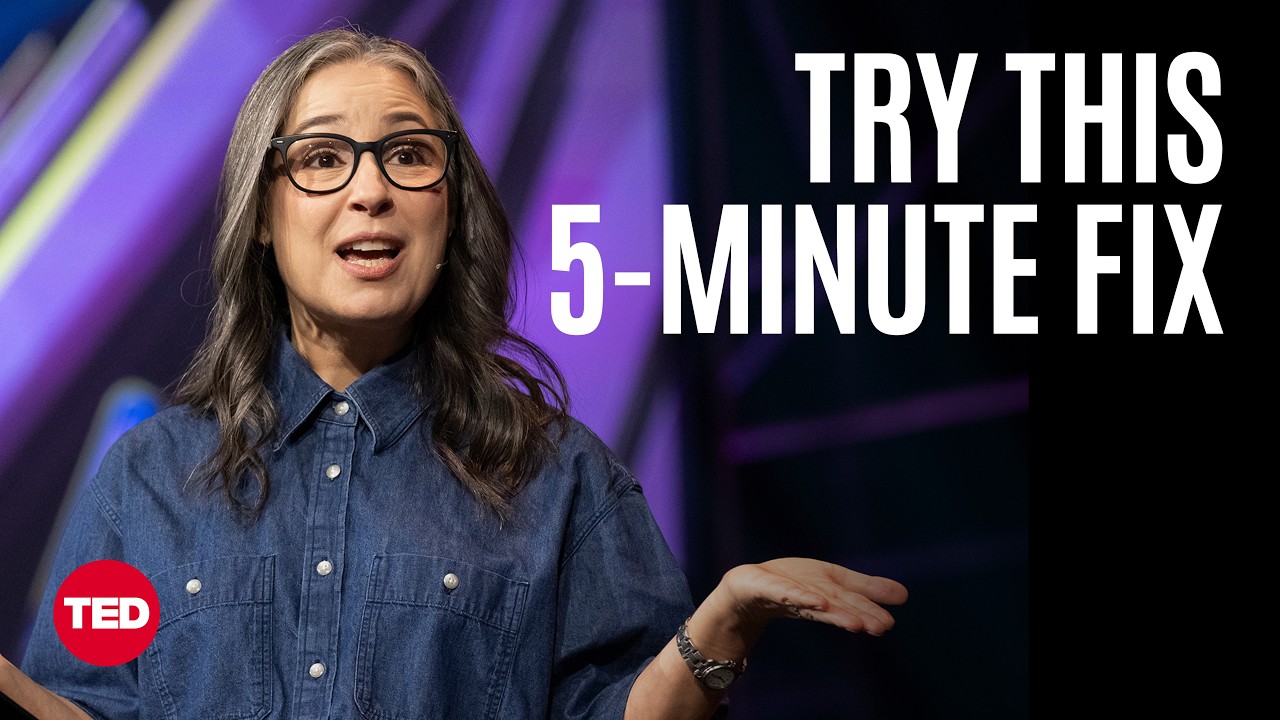
A natural companion to this week’s Deep Dive. Journalist Manoush Zomorodi walks through what constant connectivity is doing to the body rather than just the mood, from the sitting that comes with it to the low-grade fatigue most people have stopped noticing.
QUICK HITS
3 interesting reads from the health world this week
That's it for this week.
Evidence that the story you tell yourself about your stress matters as much as the stress itself, a talk on what always-on living is doing to your body, and three quick reads to carry you into the weekend. Your workload is often out of your hands. How you read it isn’t.
Take care of yourself,
The Vitality Club